
Choosing the right colours for your home is not just about aesthetics. According to traditional Vastu Shastra, colours are associated with different directions, elements, and energies. The right colour combination can help create a peaceful, welcoming, and balanced living environment.
Whether you are buying a new home, renovating your interiors, or planning to repaint a room, this guide by VastuwithRitesh will help you explore suitable colours as per Vastu for every room.
1. Best Colours for the Living Room as Per Vastu
The living room represents social interaction, family bonding, and hospitality. Choose shades that create a warm and inviting atmosphere.
Light Green: Associated with freshness and harmony.
Light Blue: Creates a calm and relaxing ambience.
Cream and Beige: Offer a balanced, elegant appearance.
Light Yellow: Adds warmth and brightness.
Vastu tip: Consider the living room's direction and natural lighting before finalising your colour scheme.
2. Best Colours for the Master Bedroom
The master bedroom should promote relaxation, comfort, and tranquillity.
Light Pink: Traditionally associated with love and warmth.
Peach: Creates a soothing atmosphere.
Light Yellow: Adds gentle warmth.
Cream and Beige: Provide a peaceful, neutral backdrop.
Vastu tip: Prefer softer shades for large wall surfaces to maintain a relaxing environment.
3. Best Colours for the Kitchen
The kitchen is associated with the fire element in Vastu Shastra. Warm, light shades are commonly recommended.
Light Copper: Makes the space feel bright.
Soft Red: Works well as a limited accent colour.
Light Orange: Adds warmth and vibrancy.
Peach: Creates a welcoming appearance.
Vastu tip: Balance warm colours with neutral cabinets and countertops for a comfortable visual effect.
4. Best Colours for the Pooja Room
The pooja room is a space for prayer, meditation, and reflection. Light colours are generally preferred.
White: Represents simplicity and peace.
Cream: Creates a serene atmosphere.
Off white color: Traditionally associated with auspiciousness.
Light Blue: Offers a calm visual atmosphere.
A study room should support concentration and a comfortable working environment.
Light Green: Creates a fresh, balanced setting.
Light Blue: Offers a calm visual atmosphere.
Cream: Keeps the space bright.
Soft Yellow: Adds warmth and brightness.
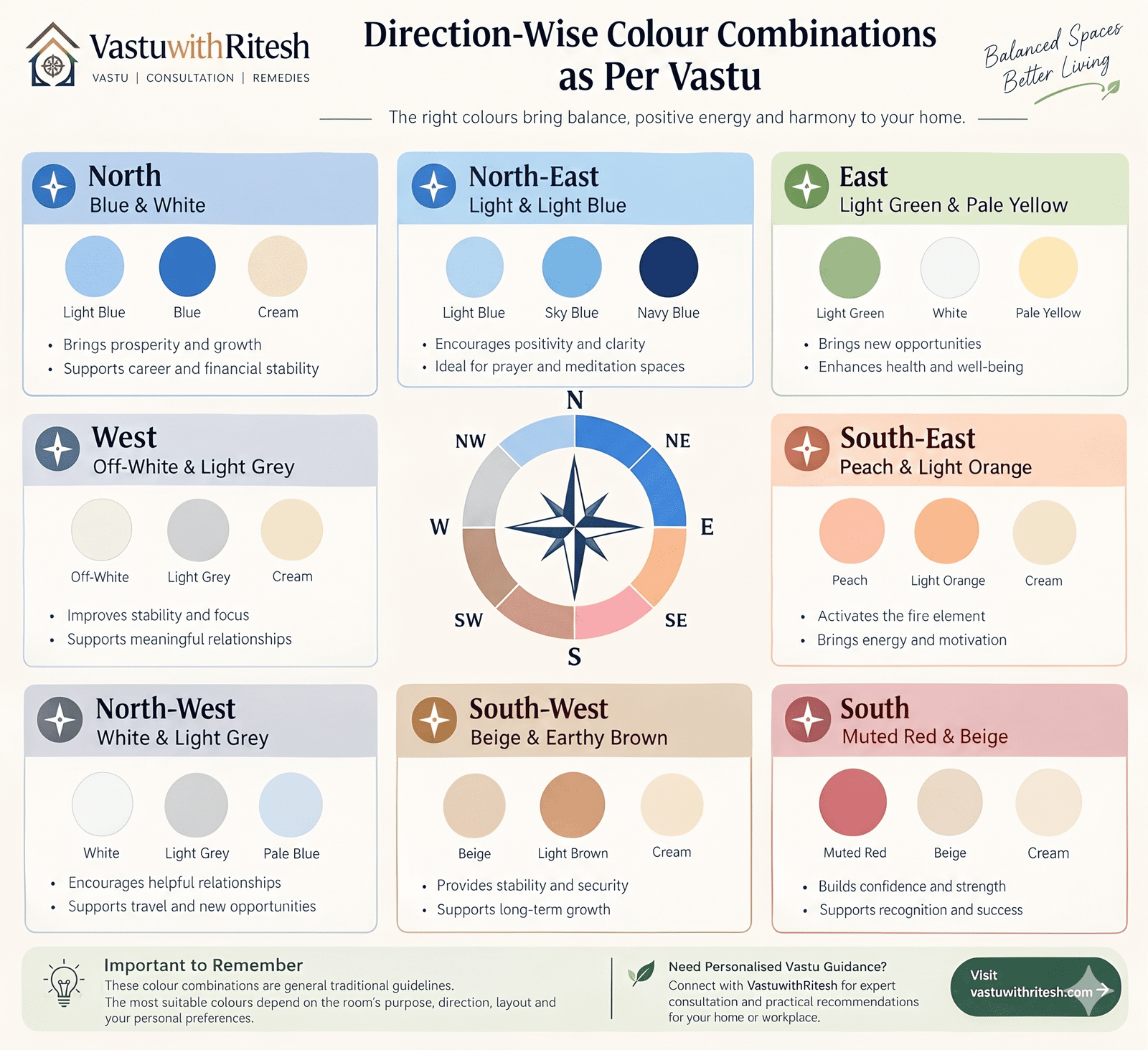
Traditional Vastu recommendations may vary, but these combinations are commonly suggested:
North: Light Blue and white.
North-East: Light blue.
East: Light green.
South-East: Light copper and light Red.
South: Muted Orange and beige.
South-West: Light yellow and light earthy brown.
West: Pure white and light grey.
North-West: White and light blue.
These are general guidelines. The most suitable colours depend on the room's purpose, layout, and the Vastu approach being followed.
7. Common Colour Selection Mistakes to Avoid
Choosing colours without considering the room's direction.
Using dark or highly saturated colours excessively.
Ignoring natural light and room size.
Following generic online colour charts without considering the property layout.
Overlooking personal comfort and interior design preferences.
Conclusion: Choose the Right Colours for Your Home
Selecting colours as per Vastu involves considering directions, room functions, and traditional recommendations. A thoughtfully planned colour scheme can also enhance the beauty and comfort of your home.
Need personalised Vastu guidance for your home?
At VastuwithRitesh, explore professional Vastu consultation and practical recommendations tailored to your property's layout and requirements.
Visit https://vastuwithritesh.com/ to learn more and take the next step towards creating a harmonious living space.
Whatsapp : 6301599319
Follow us on Instagram: https://www.instagram.com/vastuwithritesh/
VastuwithRitesh | Vastu Experts | 12+ Years of Experience | 2K+ Happy Clients
Disclaimer: Vastu Shastra is a traditional system of spatial principles and beliefs. Its recommendations do not guarantee specific outcomes and do not replace legal, surveying, engineering, or financial due diligence.